
What Is Operations Management, Really? A Director’s Honest Breakdown

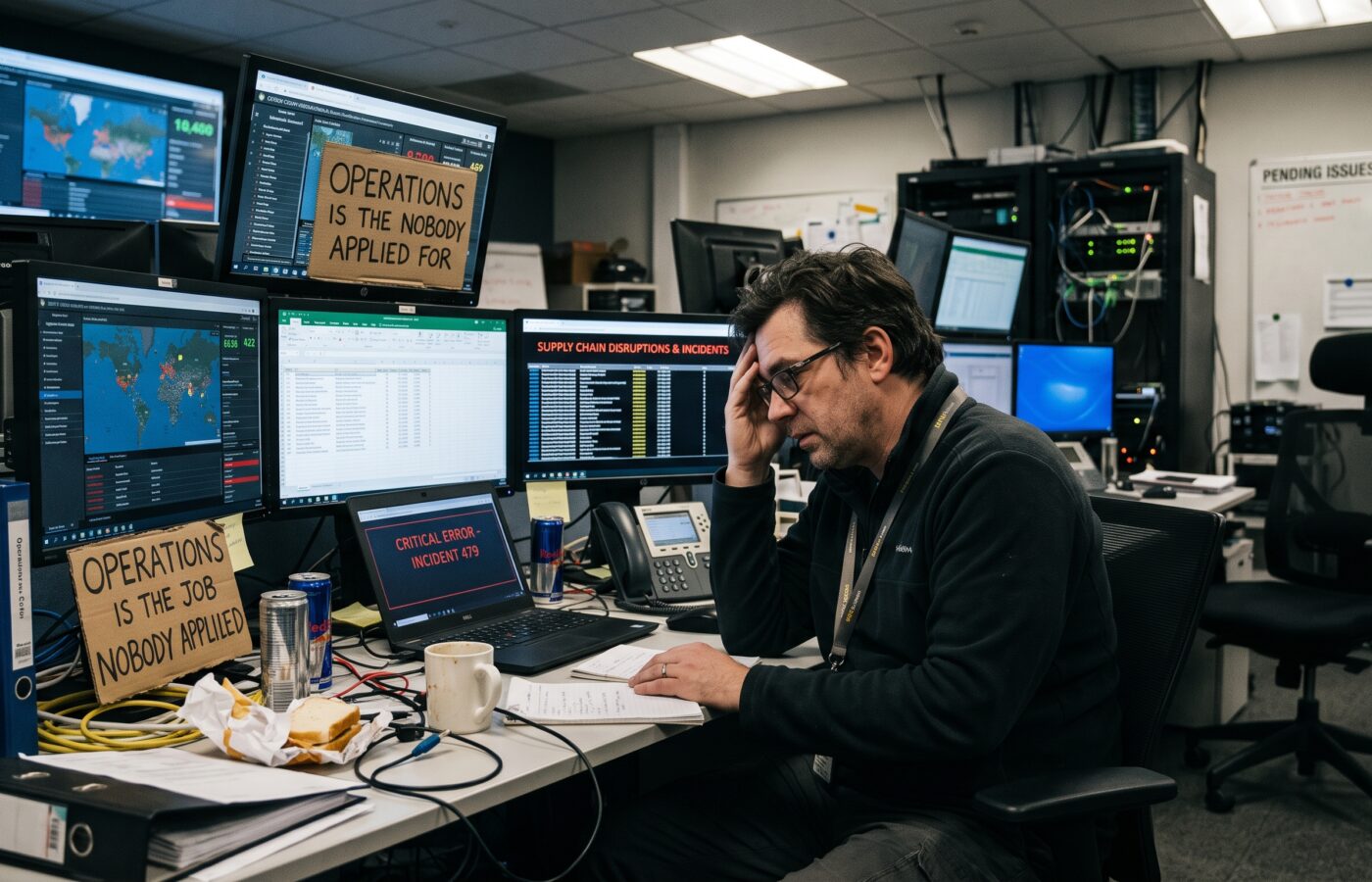
I have never met a kid who said they wanted to grow up and run operations. Nobody stands up at career day and announces a dream of reconciling vendor invoices. Likewise, nobody dreams about rewriting a shift schedule for the third time in a week. And yet here I am. I’m a Director of Operations with more than a decade in the seat. So I can tell you that operations management is a career almost everyone backed into sideways.
Maybe you were the person on your team who quietly noticed when something broke and fixed it. Perhaps your team promoted you because you were the most organized person in the room. Or you asked “wait, why do we do it this way?” one too many times, and someone said, fine, you handle it then. That’s basically the hiring process for half the operations managers I know. In short, nobody applied for this job. We got voluntold, discovered we were good at it, and never left.
I wanted to write this piece for a reason. So much published writing about operations management sounds like it came from someone who never sat in the chair. It’s all flowcharts and confident bullet points about “streamlining workflows.” Admittedly, that stuff has its place. But maybe you’re new to this role, or thinking about stepping into it. If so, I want to tell you what the job actually feels like from the inside, not from a textbook.
What people think operations management is versus what it actually is
Ask someone outside the field what an operations manager does. Usually, you’ll hear something vague about “keeping things running smoothly.” That answer is technically true. However, it’s true in the same loose way that saying a surgeon “helps people feel better” is true. Either way, it leaves out everything that makes the job hard.
The daily negotiation
Most days, operations management is a constant negotiation between what should happen and what is actually happening. For example, the schedule says the shipment arrives Tuesday. It arrives Thursday instead. Now three other plans built on that Tuesday assumption need a rebuild, in real time. Similarly, the budget says the team has enough people for the busy season. Then two people request the same week off. Someone else calls in sick. Suddenly you’re covering a shift you haven’t worked in years, just so the doors open on time.
Built on adaptation, not control
People imagine operations management as a role about control. In reality, it’s a role about adaptation. You aren’t preventing chaos, because chaos will show up no matter how good your systems are. Instead, what you actually do is build enough slack and clear communication into the system. Then, when chaos shows up, it doesn’t take the whole operation down with it. That’s why I’ve started describing my job to new hires as “professional adjusting.” That gets a laugh, but it isn’t really a joke.
You are the translator
Nobody tells you how much of operations management is translation. You constantly move between languages. Finance, for instance, speaks in margins and forecasts, often filtered through whatever a fractional CFO tells leadership that quarter. The floor, meanwhile, speaks in “this machine is making a weird noise” and “we’re out of boxes again.” Leadership speaks in strategy decks and growth targets. Your job, more than anything else, is standing in the middle of all that. You make sure each group understands what the others need, because left alone, they mostly don’t talk to each other at all.
Operations management is invisible until it is not
Nobody notices what works
This took me years to accept: good operations management is invisible. When everything runs well, nobody notices you. Orders go out on time. The team shows up and knows what to do. The numbers look fine at the end of the month. As a result, everyone assumes things simply work that way on their own. A smooth week rarely earns a compliment. From the outside, it doesn’t look like an achievement. Instead, it looks like the absence of a problem.
Everyone notices what breaks
Then one thing breaks, and suddenly you’re the most visible person in the building. Maybe a shipment runs late. Or perhaps a system goes down for two hours. Worse, a client calls the owner directly because something slipped through. Now everyone in leadership knows your name and wants an explanation by end of day. That’s the strange emotional rhythm of the job. You do a hundred things right and hear nothing. You get one thing wrong, and that’s the day people remember.
Where the reward actually lives
I’m not complaining. In fact, I’ve made peace with it. But anyone stepping into operations management for the first time needs to hear this up front. The reward in this work is rarely applause. Rather, the reward is a business that functions and a team that trusts you. It’s the quiet satisfaction of watching a process you built hold up under pressure. So if you need regular external validation, this chair will be a rough fit. If you find satisfaction in things simply working the way they should, however, you’ll do fine.
What operations management actually covers
People tend to think operations is one thing. It’s really a handful of different jobs stitched together and handed to one person. In my experience, effective operations management touches at least four areas. Of course, the mix shifts depending on the size and type of the business.
People
The first area is people. Think scheduling, training, performance, and morale. This is exactly where staffing and workforce plans quietly fall apart every Q2 when nobody plans for predictable churn. Think conflict between teammates who don’t get along. Or think about the person quietly running on empty who hasn’t said so yet. Indeed, a huge amount of operations management is really people management wearing a different hat. You can build the most efficient process in the world on paper. Still, it will fall apart if the people running it have nothing left to give, lack real training, or feel unheard.
Process
The second area is process. Most people associate this part with the title. It covers the actual workflow: the sequence of steps that turns raw material or a customer request into a finished result. First, you map it, test it, and find where it breaks. Then you fix it. Six months later, however, it breaks somewhere else, because the business grew and the old process couldn’t keep up.
Resources
The third area is resources, whether that means inventory, equipment, budget, or vendor relationships. Somebody has to make sure the right amount of the right thing sits in the right place at the right time. Somebody also has to justify the cost. That calls for the same scrutiny you’d apply to any outside contract. For example, know what a marketing agency actually bills for before anyone signs one. This is also where operations management overlaps heavily with supply chain and procurement, especially in businesses that move physical goods.
Systems and data
The fourth area is systems and data. Every business now runs on some combination of software. Getting those tools to talk to each other is the same challenge behind any consulting or technology services tech stack that grew faster than anyone planned. You need trustworthy data. Just as importantly, you need a team that trusts the software instead of fighting it. I once spent more hours than I’d like to admit untangling a reporting error. Two systems simply disagreed about what “closed” meant for an order status. In many companies, glitches like that turn into the same recurring help desk tickets IT support carries quarter after quarter.
If you want a more formal breakdown of these functions, Indeed and NetSuite both cover the responsibilities and metrics side in more depth than I can fit here. I’ve linked their guides in the references below.
The operations management skills nobody puts on the job posting
Job postings for operations roles love to list “strong analytical skills” and “proficiency in Excel.” Fine, those matter. But they miss most of what actually makes someone good at this job.
Prioritizing with incomplete information
The first real skill is prioritizing under incomplete information. You’ll almost never have all the facts when a decision needs to happen. For instance, a supplier goes quiet about when a late shipment will arrive. Meanwhile, two departments both insist their project is the week’s priority. You have to decide anyway, and fast enough that the delay doesn’t become the next problem.
Staying calm on purpose
The second skill is staying calm while everyone around you isn’t. When something goes wrong, people look to whoever seems to have their hands on the wheel. Therefore, if you visibly panic, the whole room panics with you. For what it’s worth, I’m not naturally a calm person. I had to build that muscle on purpose. Mostly, I remind myself that almost nothing that goes wrong on a given Tuesday is actually a crisis, even when it feels like one.
Systems thinking
The third skill is what I call systems thinking. It means holding the whole operation in your head at once and noticing how a change in one place ripples somewhere else. For example, add a step to quality control, and you might slow down fulfillment. On the other hand, cut a step to speed up fulfillment, and a defect might slip through to a customer. Operations management constantly weighs trade-offs like this. The people who do it well see two or three steps ahead instead of reacting to whatever is loudest.
Plain communication
The fourth skill surprised me early on: plain communication. Not polished corporate language, just clear, honest, timely communication. Tell your team the truth about a delay before a customer breaks the news to them. Likewise, tell your boss the real reason a number is off, not a version that sounds better. In my experience, most operational failures weren’t really process failures. Somebody just didn’t say the needed thing soon enough.
Indeed has a good rundown of essential operational management skills if you want to see how employers frame these same expectations. It lines up closely with what I’ve described here.
How I actually think about measuring operations management
Every operations management article eventually gets to KPIs, so let me get there too. However, I want to be honest about how I actually use them, rather than just listing terms.
The numbers I track
Here are the numbers I watch regularly: on-time delivery rate, cost per unit or per order, employee turnover, capacity utilization, error or defect rate, and average time to resolve a complaint. None of that is exotic. In fact, discipline matters more than the specific metrics. Track them consistently. Above all, watch the trend, not the single data point. It’s the same habit behind a general business strategy built on repeatable habits instead of a document. One bad week doesn’t mean your process has failed. Three bad weeks in a row, though, usually does.
Why the dashboard is not the job
I’ve watched other operations managers fall into a trap, and I’ve fallen into it myself. The trap is treating the dashboard as the job, instead of as a tool for the job. It’s easy to focus so hard on a number that you forget why it mattered. For example, I once spent a frustrating quarter chasing a slightly better on-time delivery percentage. To get there, I pushed shipments out a day early, before the team had fully verified them. The number improved. Return requests, however, went up. In other words, the metric got better, and the actual outcome got worse. That’s about as clear an example as I can give of measuring the wrong thing well.
NetSuite has a useful guide to operational KPIs and metrics if you want a broader list than I’ve covered here.
Operations management is not the same job as project management
I want to clear this up. People still ask me about it, usually early in their careers while they decide which direction to go. Project management delivers a defined outcome within a set scope, budget, and timeline, and then the project ends. Operations management, by contrast, is ongoing. There’s no finish line where you hand off the keys and move on. Instead, the business runs every single day, and you keep running it.
That said, the two overlap constantly in practice. I run plenty of projects inside my operations role: a new warehouse layout, a software migration, a hiring push for the holiday season. The difference is that once a project wraps up, I don’t walk away. Rather, I own whatever it becomes, permanently. A project manager builds the bridge. An operations manager, on the other hand, keeps traffic moving across it every day after that, including the day it needs unexpected repairs.
If you’re weighing a career between the two paths, take a closer look at each. Northeastern University and Western Governors University have both written comparisons that go deeper than I have room for here.
The operations management mistakes that taught me the most
I’ll be honest about a few things I got wrong early on. That feels more useful than pretending I arrived in this chair already knowing what I was doing.
Documentation is not optional
I used to think documentation was optional if I trained people well enough. It isn’t. People leave. Others forget. Some move into new roles and take their institutional knowledge with them. Consequently, any process that lives only in someone’s head sits one resignation letter away from disappearing. Now I write things down obsessively, even when it feels unnecessary, because six months later it never is.
A clear no beats a fragile yes
I also used to say yes to too many requests from other departments without pushing back on timelines. Early in my career, I thought being helpful meant being agreeable. Eventually, I learned otherwise. A realistic no, given early, serves a business far better than an optimistic yes that turns into a missed deadline. After all, leadership can plan around a clear constraint. They can’t, however, plan around a promise that falls apart three weeks later.
Morale is an operational input
For longer than I’m proud of, I underestimated something. Team morale is an operational input, not a soft, secondary concern. A tired, disengaged team makes more errors. It misses more details. On top of that, it quits more often. Every one of those outcomes eventually shows up as a cost on a spreadsheet. So treating people well isn’t separate from good operations management. In fact, it’s one of the most reliable levers you actually have.
Why I stayed in operations management
I didn’t choose this career on purpose. For a long time, I assumed I’d eventually move on to something else. I haven’t, and at this point I don’t think I will. Seeing the whole picture is deeply satisfying. So is understanding how the pieces connect, and being the reason things work even when nobody outside the role notices.
If operations responsibilities just landed on you and you didn’t ask for them, welcome. It’s a strange, demanding, mostly invisible job. Even so, it will teach you more about how a business actually functions than almost any other seat. Nobody applies for it on purpose. Most of us just never left, once we realized the team needed us here.
Operations Management FAQ
What does an operations manager actually do on a daily basis?
The day-to-day mix changes constantly. Generally, it includes overseeing staff schedules and performance, monitoring workflows, and resolving bottlenecks. It also includes managing budgets and vendor relationships and reporting operational performance to leadership. Indeed’s overview of the role gives a fuller breakdown of typical responsibilities.
Is operations management a good career path?
It suits people who like variety and problem solving. It also suits people who want to stay close to the actual mechanics of a business. In addition, the role often leads toward senior leadership, since operations experience gives you visibility into nearly every part of a company. Indeed’s guide to getting into this field covers common entry points and typical salary ranges.
What is the difference between operations management and supply chain management?
Supply chain management focuses on the flow of goods, materials, and information from suppliers to customers. Operations management, by contrast, is broader. It includes supply chain as one piece, alongside people management, process design, quality, and resource planning across the whole business.
What skills should I develop if I want to move into operations management?
Prioritization, clear communication, comfort with ambiguity, basic financial literacy, and systems thinking matter more day to day than any specific software tool. For a starting point, Indeed’s checklist of essential skills for the role helps you assess your own gaps.
How is operations management different from project management?
Project management delivers a specific outcome within a fixed scope and timeline, then concludes. Operations management, on the other hand, is continuous and has no end date, since it covers the ongoing running of the business. Western Governors University’s comparison and Northeastern University’s breakdown both explain the distinction in more detail.
What metrics should an operations manager track?
Common metrics include on-time delivery rate, cost per unit or order, and capacity utilization. Error or defect rate, employee turnover, and average complaint resolution time matter too. For more, NetSuite’s guide to operational KPIs and metrics offers a broader list, along with guidance on how to use them.
References
- Indeed. What Does an Operations Manager Do? https://www.indeed.com
- Indeed. How To Get a Job in Operations Management: Steps and Salary. https://www.indeed.com
- Indeed. 15 Essential Operational Management Skills. https://www.indeed.com
- NetSuite. A Comprehensive Guide to Operational Metrics & KPIs. https://www.netsuite.com
- Western Governors University. Operations Manager vs. Project Manager: Key Differences. https://www.wgu.edu
- Northeastern University. Project Management vs. Operations Management: What’s the Difference? https://www.northeastern.edu