


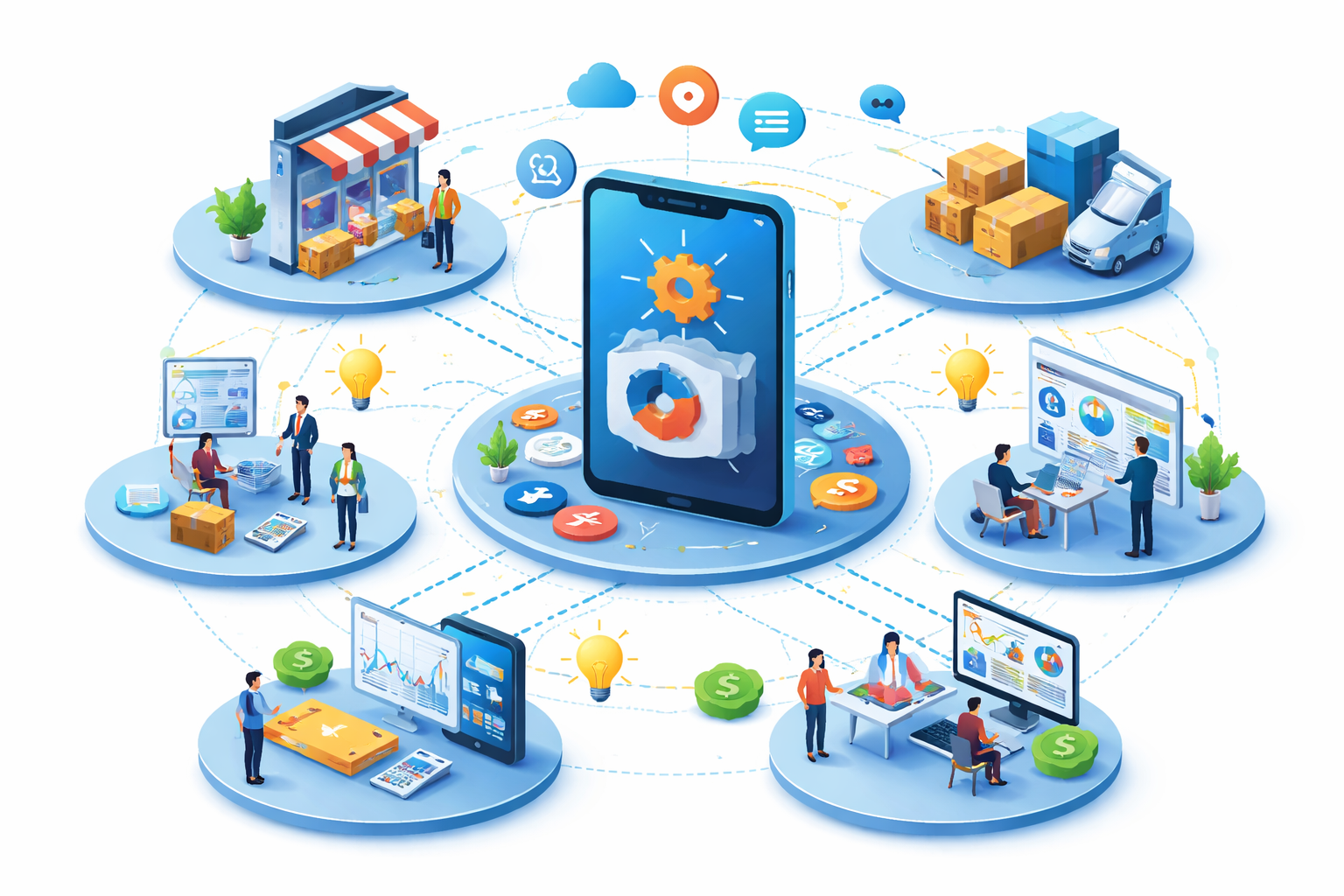
Technology no longer grows in isolation. Today’s most powerful digital businesses thrive because they operate inside interconnected environments known as platform ecosystems. Understanding how these ecosystems function is critical for companies, startups, investors, and technology leaders aiming to scale innovation and competitive advantage.
This article provides platform ecosystems explained in clear, professional terms — covering their structure, value creation models, key components, strategic importance, and real-world applications across industries.
What Is a Platform Ecosystem?
In the digital economy, a platform ecosystem refers to a network of interconnected participants — including platform owners, complementors, and users — that collaborate around a core technology to co-create value, enhance scalability, and unlock network effects across markets (see Platform Ecosystem Explained on Wikipedia).
Instead of delivering standalone products, platforms create infrastructure that allows third parties — developers, users, service providers, advertisers, and partners — to build, connect, and generate value together.
Well-known examples include:
- Apple iOS
- Google Android
- Amazon Marketplace
- Microsoft Azure
- Shopify
- Salesforce
These are not just companies; they are ecosystems where multiple stakeholders contribute to shared growth.
Platform Ecosystems Explained Simply
To put platform ecosystems explained in simple terms:
A platform acts like a digital city.
Users live in it.
Developers build inside it.
Businesses sell through it.
Partners extend it.
Data flows across it.
The more participants join and contribute, the more valuable the ecosystem becomes. This self-reinforcing growth is what makes platform businesses so powerful.
Core Components of Platform Ecosystems
Understanding the structure is essential when discussing platform ecosystems explained. Most ecosystems contain five foundational layers:
1. The Core Platform
This is the central technology infrastructure — APIs, software, marketplace, operating system, or cloud environment that enables all interactions.
2. Producers
Entities that create value within the ecosystem:
- App developers
- Merchants
- Content creators
- Service providers
3. Consumers
Users who purchase, use, or interact with products and services built on the platform.
4. Partners & Integrators
Third parties that enhance functionality:
- Payment gateways
- Analytics providers
- Hardware manufacturers
- Logistics companies
5. Governance Layer
Rules, policies, standards, monetization models, and controls that ensure ecosystem stability and trust.
Why Platform Ecosystems Matter?
The reason platform ecosystems explained is such an important topic is because ecosystems outperform traditional business models in several ways:
Network Effects
Each new participant increases the value for others. More sellers attract more buyers; more apps attract more users.
Faster Innovation
External developers continuously expand the platform’s capabilities without the platform owner building everything themselves.
Scalability
Platforms scale exponentially rather than linearly. Growth is driven by participants, not internal production.
Lock-In & Competitive Moats
Once users and producers are embedded, switching becomes difficult. This creates powerful market dominance.
Data Flywheel
Ecosystems generate massive behavioral and transactional data that can be reinvested into personalization and AI.
Types of Platform Ecosystems
A key part of platform ecosystems explained is recognizing that not all ecosystems operate the same way.
Transaction Platforms
Facilitate exchanges between buyers and sellers.
- Amazon
- Uber
- Airbnb
Innovation Platforms
Enable developers to build complementary technologies.
- iOS
- Android
- Salesforce
Integration Platforms
Connect services and workflows across systems.
- Zapier
- Stripe
- Shopify
Data Platforms
Aggregate and monetize large-scale data.
- Meta
- Snowflake
How Platforms Create Ecosystem Value
Platform ecosystems succeed by orchestrating value rather than owning all assets.
They create value through:
- Reducing friction between participants
- Standardizing technology frameworks
- Providing tools for creation and monetization
- Offering distribution channels
- Enabling trust and security
In short, platforms win by enabling others to win.
This is one of the most important principles when platform ecosystems explained to business leaders.
Governance: The Hidden Power Behind Ecosystems
Governance determines ecosystem health. Poor governance leads to spam, fraud, low-quality participation, and collapse.
Strong governance includes:
- Developer guidelines
- Quality control
- Revenue-sharing models
- Platform rules
- Data policies
- Security enforcement
Apple and Google, for example, tightly control app ecosystems to maintain trust and consistency.
Governance is often overlooked but central to platform ecosystems explained in professional strategy discussions.
Ecosystem Flywheel Effect
Platforms grow using a reinforcing cycle:
- Attract producers
- Increase consumer value
- Drive more engagement
- Generate data
- Improve platform
- Attract more producers
This flywheel explains why early traction is hard but dominance becomes powerful once scale is reached.
Risks in Platform Ecosystems
While powerful, ecosystems come with challenges that must be acknowledged when platform ecosystems explained thoroughly.
- Overdependence on third parties
- Regulatory scrutiny
- Platform abuse
- Monopoly concerns
- Revenue concentration
- Governance complexity
Platform owners must balance openness with control.
Platform Ecosystems Across Industries
The ecosystem model is expanding beyond tech companies.
Healthcare
Platforms connecting providers, insurers, patients, and health data.
Finance
Fintech ecosystems integrating payments, lending, investments, and APIs.
Manufacturing
Industrial IoT platforms connecting machines, analytics, suppliers, and services.
Education
Learning platforms hosting educators, students, and digital content.
Retail
Marketplace ecosystems replacing standalone online stores.
Every sector is moving toward platform-driven collaboration.
Strategic Lessons from Leading Ecosystems
When platform ecosystems explained through successful companies, several patterns emerge:
- Start with a strong core product
- Enable third-party participation early
- Prioritize developer tools
- Incentivize producers
- Control quality strictly
- Build monetization layers later
- Focus on long-term network effects
Platforms are not built; they are cultivated.
How Businesses Can Leverage Platform Ecosystems
Companies today must decide whether to:
- Build their own ecosystem
- Join an existing platform
- Partner strategically within ecosystems
Joining ecosystems allows faster scaling, reduced costs, and expanded reach — but also reduces control.
Understanding platform ecosystems explained helps businesses make smarter digital strategy decisions.
The Future of Platform Ecosystems
Becoming the dominant structure of the digital economy.
AI, APIs, automation, and cloud infrastructure are accelerating ecosystem expansion. Future platforms will be:
- More data-driven
- More interconnected
- More specialized
- More global
The companies that control ecosystems will shape industries.
Final Thoughts
Platform ecosystems explained is not just a tech concept — it’s a business transformation model. Platforms succeed because they create environments where multiple participants generate value together at scale.
Organizations that understand ecosystems can unlock powerful growth, innovation, and competitive advantages.
Those that ignore them risk being replaced by more connected, collaborative digital platforms.