


Customer acquisition often gets the spotlight in marketing discussions, but smart companies know that keeping existing customers is just as important—often even more profitable. Understanding the customer retention cost formula helps businesses measure how much they spend to keep current customers engaged and loyal. When companies track this metric correctly, they can make better decisions about marketing budgets, customer support investments, and long-term growth strategies.
This guide explains the customer retention cost formula, how to calculate it, and how businesses can use the insights to improve profitability and customer loyalty.
What Is Customer Retention Cost?
Customer Retention Cost (CRC) refers to the total amount a company spends to keep existing customers from leaving over a specific time period. These costs include marketing campaigns, loyalty programs, customer support, account management, and other initiatives aimed at maintaining customer relationships.
While companies frequently measure Customer Acquisition Cost (CAC), retention costs are often overlooked. However, retaining customers is typically far cheaper than acquiring new ones. Studies consistently show that increasing customer retention by just a few percentage points can significantly boost long-term revenue.
Tracking retention costs helps organizations understand whether their investment in customer loyalty is delivering the expected returns.
The Customer Retention Cost Formula
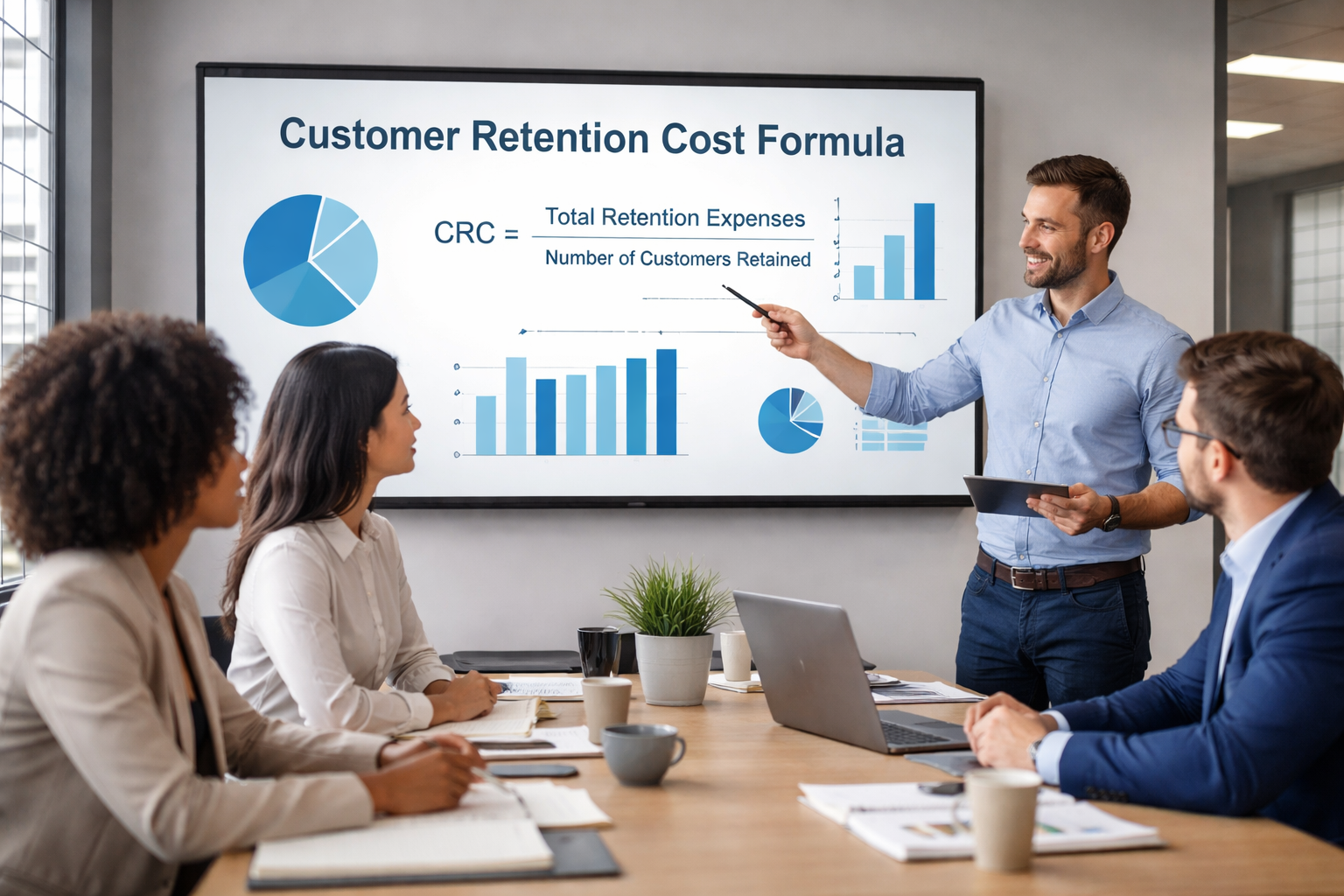
The customer retention cost formula is relatively simple. It measures how much a company spends on retention efforts divided by the number of customers retained.
Customer Retention Cost Formula
[
\text{Customer Retention Cost (CRC)} = \frac{\text{Total Retention Expenses}}{\text{Number of Customers Retained}}
]
This formula provides a clear view of how efficiently a business maintains its customer base.
Breaking Down the Formula
To calculate customer retention cost accurately, companies must first identify all expenses related to retention activities. These usually include:
1. Customer Support Costs
Customer service teams play a key role in retention. Expenses can include:
- Support staff salaries
- Helpdesk software subscriptions
- Live chat and chatbot tools
- Customer success managers
Effective support systems reduce churn and strengthen customer relationships.
2. Loyalty Programs and Rewards
Many companies use reward systems to encourage repeat purchases. Examples include:
- Loyalty points programs
- Discounts for returning customers
- Referral bonuses
- Membership perks
These incentives add costs but can increase long-term revenue.
3. Retention Marketing Campaigns
Marketing aimed at existing customers is also part of retention expenses. These may include:
- Email marketing campaigns
- Customer re-engagement campaigns
- Personalized product recommendations
- Customer education and onboarding materials
Retention marketing is often cheaper than acquisition marketing because the audience already knows the brand.
4. Customer Experience Improvements
Businesses invest in improving customer experiences to prevent churn. These improvements may include:
- Website usability improvements
- Product updates and feature development
- Customer feedback programs
- Account management systems
Although these costs may also support acquisition efforts, they play a critical role in keeping current customers satisfied.
Example of the Customer Retention Cost Formula
Consider a SaaS company calculating its retention costs for a quarter.
Retention Expenses
- Customer support salaries: $25,000
- Email marketing campaigns: $5,000
- Loyalty program rewards: $8,000
- Customer success tools: $2,000
Total retention expenses = $40,000
During the same quarter, the company successfully retained 1,000 customers.
Using the customer retention cost formula:
[
CRC = \frac{40,000}{1,000}
]
Customer Retention Cost = $40 per customer
This means the company spends $40 to retain each existing customer.
Why Customer Retention Cost Matters
Understanding the customer retention cost formula allows companies to make strategic business decisions. Several important insights come from tracking this metric.
1. Measuring Profitability
Retention costs directly affect overall profitability. If it costs too much to retain customers compared to their lifetime value, the business model may need adjustment.
A healthy business typically ensures that Customer Lifetime Value (CLV) significantly exceeds retention costs.
2. Improving Marketing Efficiency
Businesses often overspend on acquisition campaigns while underinvesting in retention strategies. Tracking retention costs helps companies allocate resources more effectively.
Retention-focused marketing often delivers higher ROI because existing customers already trust the brand.
3. Reducing Customer Churn
High churn rates signal potential issues with product quality, customer support, or user experience. By monitoring retention costs alongside churn metrics, companies can identify weak points in their customer journey.
Lower churn means more stable revenue streams and stronger long-term growth.
4. Enhancing Customer Experience
Retention metrics often highlight areas where customer experiences can improve. When companies invest wisely in support systems and customer engagement, satisfaction increases and retention costs can decrease over time.
Customer Retention Cost vs Customer Acquisition Cost
Customer retention cost and customer acquisition cost serve different but complementary roles in business analytics.
| Metric | Purpose |
|---|---|
| Customer Acquisition Cost (CAC) | Measures cost of acquiring new customers |
| Customer Retention Cost (CRC) | Measures cost of keeping existing customers |
In many industries, acquiring new customers can cost five times more than retaining existing ones. Businesses that balance both metrics effectively tend to achieve stronger financial performance.
Companies should analyze these metrics together with customer lifetime value to fully understand customer profitability.
How to Reduce Customer Retention Cost
Reducing retention costs without harming customer satisfaction requires strategic improvements rather than simply cutting budgets. Businesses can adopt several practical strategies.
Improve Customer Onboarding
Many customers leave because they never fully understand how to use a product. Effective onboarding helps users experience value quickly, reducing the need for ongoing support.
Clear tutorials, documentation, and guided product tours can significantly improve retention.
Use Data and Analytics
Customer data can reveal patterns in behavior and churn risk. Businesses can use analytics tools to identify:
- customers likely to cancel
- engagement trends
- product usage patterns
With this data, companies can intervene early with targeted engagement campaigns.
Automate Customer Support
Automation tools such as chatbots and knowledge bases can handle common support requests efficiently. This reduces staffing costs while maintaining fast response times.
Automation also allows human support teams to focus on complex issues that require personal attention.
Personalize Customer Communication
Personalized communication strengthens customer relationships and increases loyalty. Businesses can personalize messages using:
- purchase history
- browsing behavior
- product preferences
Personalized experiences increase engagement and reduce the likelihood of churn.
Key Metrics to Track Alongside Retention Cost
Customer retention cost is most valuable when analyzed with other business metrics.
Customer Lifetime Value (CLV)
CLV measures the total revenue a customer generates over the course of their relationship with a company. Retention costs should always be significantly lower than lifetime value.
Churn Rate
Churn rate represents the percentage of customers who stop doing business with a company within a given period.
Lower churn generally means retention strategies are effective.
Net Revenue Retention (NRR)
NRR measures revenue retained from existing customers after accounting for expansions, upgrades, and churn.
High NRR indicates strong customer satisfaction and product value.
Common Mistakes When Calculating Retention Costs
Businesses sometimes miscalculate retention costs due to incomplete data or incorrect assumptions.
Some common mistakes include:
- ignoring indirect costs such as product updates
- excluding customer success teams
- failing to track retention expenses across departments
- calculating retention costs over inconsistent time periods
To ensure accurate results, companies should standardize their measurement process and review costs regularly.
Final Thoughts
The customer retention cost formula is an essential metric for businesses that want sustainable growth. By understanding how much it costs to maintain customer relationships, companies can optimize marketing budgets, improve customer experiences, and reduce churn.
In a competitive digital economy, retaining loyal customers is often more profitable than constantly chasing new ones. Businesses that carefully monitor retention costs and align them with customer lifetime value will be better positioned to achieve long-term success.
Tracking retention metrics is not just about reducing expenses—it is about building stronger, more valuable relationships with the customers who already trust your brand.