


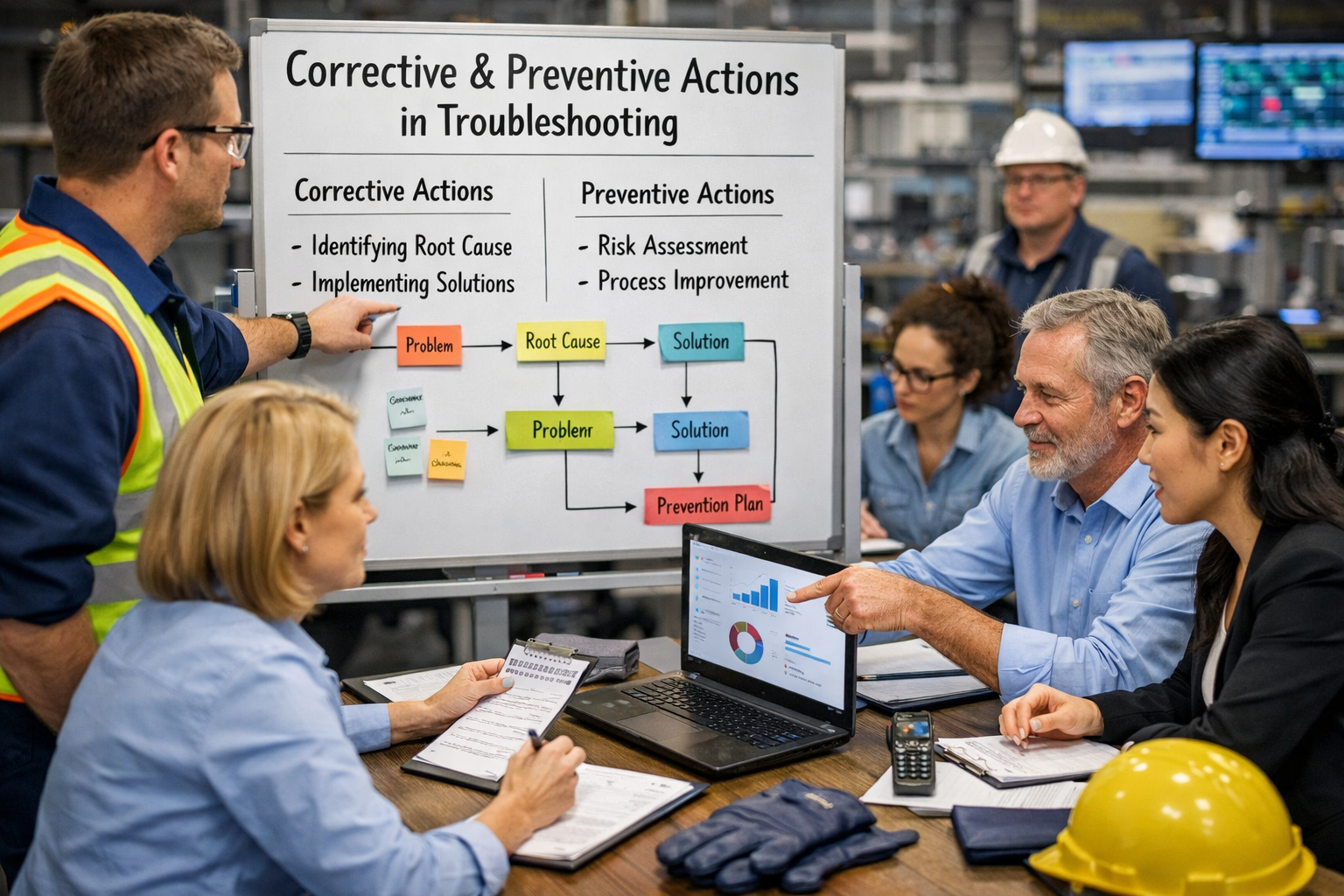
In every organization, from manufacturing and healthcare to IT services and finance, problems are inevitable. What separates high-performing organizations from struggling ones is not the absence of problems, but how effectively they respond to them. Corrective and Preventive Actions (CAPA) form the backbone of structured troubleshooting and problem solving. When implemented correctly, CAPA systems not only resolve existing issues but also prevent future failures, enabling continuous improvement and long-term operational excellence.
For a formal definition and industry-standard framework, corrective and preventive actions (CAPA) are widely recognized in quality management systems such as those outlined by regulatory bodies like the FDA.
This article explores corrective and preventive actions in depth—what they are, how they work, and how organizations can apply them to build resilient systems and processes.
Understanding Corrective and Preventive Actions
Corrective and Preventive Actions are systematic approaches used to identify, analyze, and eliminate the causes of problems or nonconformities.
- Corrective Action refers to steps taken to eliminate the root cause of a detected problem or failure.
- Preventive Action refers to steps taken to eliminate the root cause of a potential problem before it occurs.
Together, they create a proactive framework that shifts organizations from reactive firefighting to strategic risk management.
Corrective and preventive actions are widely embedded in quality management systems such as ISO 9001, Six Sigma, Lean, ITIL, and regulatory frameworks in industries like pharmaceuticals, aviation, and food safety.
The Role of CAPA in Troubleshooting and Problem Solving
Traditional troubleshooting often focuses on immediate fixes—restoring systems, resolving complaints, or patching failures. While this may restore short-term functionality, it rarely addresses systemic weaknesses.
CAPA introduces discipline into problem solving by requiring organizations to:
- Identify the problem.
- Analyze the root cause.
- Implement targeted actions.
- Verify effectiveness.
- Prevent recurrence.
This structured approach transforms troubleshooting from symptom treatment into sustainable solution design.
Corrective Actions: Fixing Problems at the Root
Corrective actions are implemented after a problem has already occurred. Their purpose is not simply to correct the outcome, but to eliminate the underlying cause that allowed the problem to exist in the first place.
Key Characteristics of Effective Corrective Actions
- Root Cause Focus
Effective corrective action begins with root cause analysis. Tools such as the 5 Whys, Fishbone (Ishikawa) Diagram, and Failure Mode and Effects Analysis (FMEA) are commonly used. - System-Level Thinking
Corrective actions should address process failures, not individual mistakes. Blaming people rarely leads to sustainable improvement. - Documented and Trackable
All corrective actions should be recorded, assigned to responsible owners, and monitored until closure. - Validated for Effectiveness
A corrective action is only successful if the problem does not recur. Post-implementation monitoring is essential.
Example of Corrective Action
A manufacturing plant experiences repeated equipment breakdowns. Instead of repeatedly repairing the machine, root cause analysis reveals insufficient preventive maintenance schedules. The corrective action is to redesign the maintenance program and retrain technicians.
Preventive Actions: Stopping Problems Before They Start
Preventive actions are proactive. They focus on identifying risks and vulnerabilities before failures occur.
While corrective actions respond to known issues, preventive actions anticipate future ones.
Key Characteristics of Effective Preventive Actions
- Risk-Based Approach
Preventive actions are driven by risk assessments, audits, trend analysis, and near-miss reporting. - Forward-Looking Perspective
They focus on “what could go wrong” rather than “what went wrong.” - Integration with Continuous Improvement
Preventive actions align with Lean, Kaizen, and Total Quality Management principles. - Cost-Efficiency
Preventing failures is almost always cheaper than fixing them after damage occurs.
Example of Preventive Action
An IT company identifies increasing system load that could lead to outages. Before any failure occurs, they upgrade infrastructure and implement load balancing.
Corrective vs Preventive Actions: Key Differences
| Aspect | Corrective Action | Preventive Action |
|---|---|---|
| Timing | After a problem occurs | Before a problem occurs |
| Trigger | Nonconformity or failure | Risk or potential issue |
| Focus | Root cause of existing problem | Root cause of potential problem |
| Objective | Eliminate recurrence | Eliminate occurrence |
| Nature | Reactive | Proactive |
Both are equally important and should function together within an integrated management system.
The CAPA Process Framework
A robust CAPA system follows a structured lifecycle:
1. Problem Identification
Issues may arise from customer complaints, audits, performance metrics, incident reports, or inspections.
2. Root Cause Analysis
This is the most critical phase. Without proper analysis, organizations risk applying superficial fixes.
3. Action Planning
Define specific, measurable, achievable, relevant, and time-bound (SMART) actions.
4. Implementation
Assign responsibilities, allocate resources, and execute the actions.
5. Effectiveness Review
Measure whether the actions solved the problem and prevented recurrence.
6. Standardization
Update procedures, policies, training, and documentation to embed improvements.
Common Mistakes in CAPA Implementation
Despite good intentions, many organizations fail to extract full value from corrective and preventive actions due to recurring pitfalls:
- Treating symptoms instead of causes
- Lack of management ownership
- Poor documentation
- No follow-up or verification
- Using CAPA only for compliance, not improvement
CAPA should never be viewed as a bureaucratic requirement. It is a strategic capability.
CAPA as a Strategic Business Tool
Beyond quality assurance, CAPA contributes directly to:
- Operational resilience
- Customer satisfaction
- Regulatory compliance
- Risk management
- Cost reduction
- Organizational learning
When organizations treat CAPA as a core business process, they move closer to becoming learning organizations—entities that continuously adapt, evolve, and improve.
Integrating CAPA into Organizational Culture
The most successful CAPA systems are embedded into culture, not imposed through policy.
This requires:
- Leadership commitment to transparency
- Psychological safety for reporting issues
- Training in problem-solving tools
- Rewarding improvement initiatives
- Data-driven decision making
When employees see that problems lead to improvement rather than punishment, reporting increases, and system reliability improves.
Measuring the Effectiveness of CAPA
To ensure corrective and preventive actions deliver real value, organizations should track:
- Recurrence rates
- Time to closure
- Cost of non-quality
- Process performance indicators
- Customer satisfaction scores
These metrics transform CAPA from a paperwork exercise into a measurable business driver.
CAPA in the Age of Digital Transformation
Modern organizations are leveraging technology to enhance CAPA effectiveness through:
- Automated incident tracking systems
- AI-driven root cause analysis
- Predictive analytics for preventive action
- Real-time dashboards
- Integrated quality management platforms
Digital tools enable faster detection, deeper analysis, and smarter prevention strategies.
Conclusion
Corrective and preventive actions are the foundation of effective troubleshooting and problem solving. While corrective actions resolve existing failures, preventive actions protect organizations from future risks. Together, they create a powerful cycle of continuous improvement.
Organizations that invest in strong CAPA systems do more than fix problems—they build resilient processes, improve decision-making, and create cultures that learn from failure. In an increasingly complex and competitive world, the ability to systematically correct and prevent problems is not just a quality function—it is a strategic advantage.
By embedding corrective and preventive actions into everyday operations, organizations move from reactive survival to proactive excellence.