


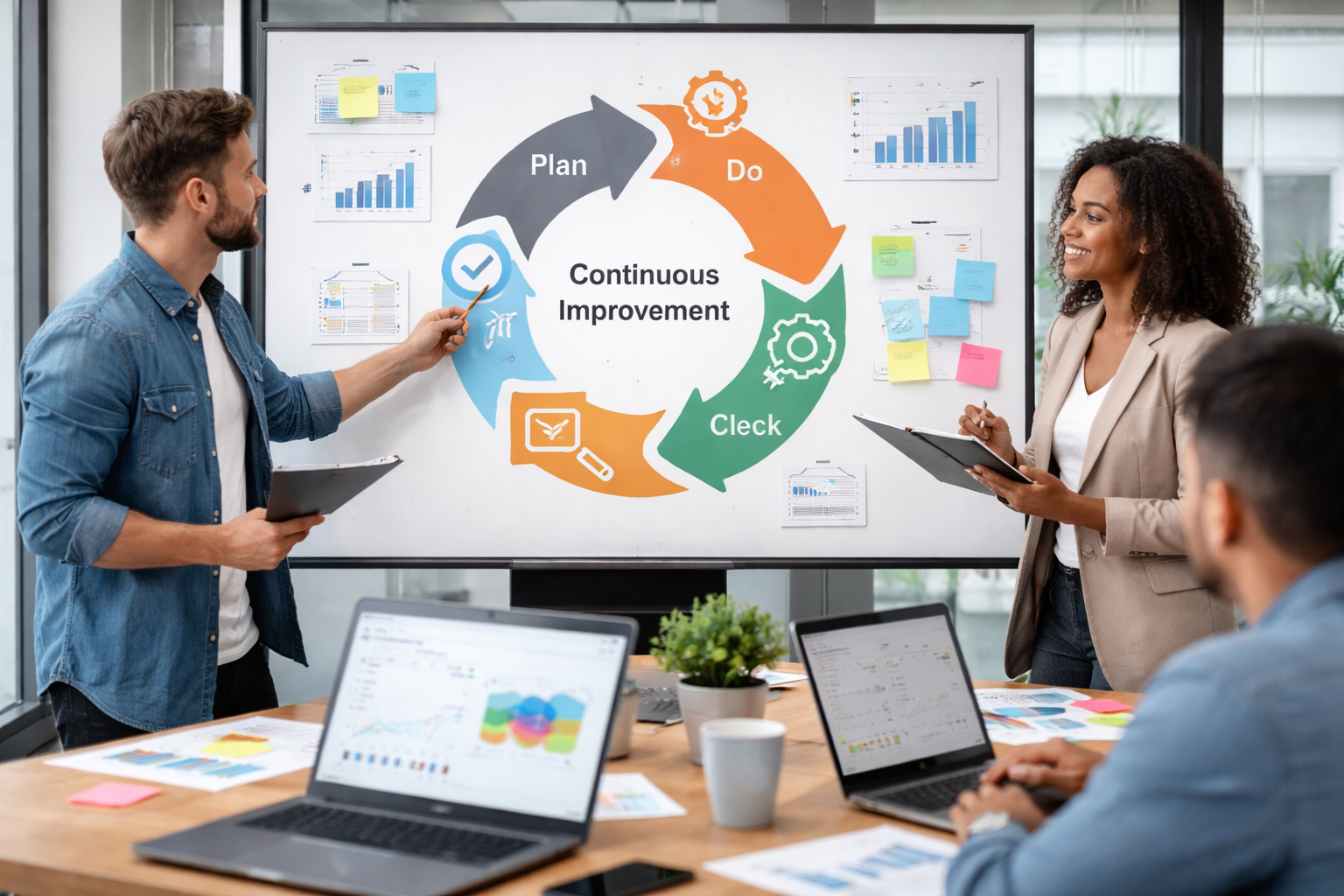
In today’s competitive and fast-evolving digital landscape, companies can no longer rely on one-time optimizations or static processes. Success depends on adaptability, learning, and constant refinement. That’s why building continuous improvement systems has become essential for startups and modern organizations. According to continuous improvement systems, small, incremental changes can lead to significant long-term results.
A well-designed continuous improvement system enables teams to identify inefficiencies, test solutions, and implement changes that drive long-term growth. Instead of reacting to problems, businesses become proactive, data-driven, and resilient.
What Are Continuous Improvement Systems?
At its core, building continuous improvement systems involves creating structured processes that help organizations consistently evaluate and enhance their performance.
These systems focus on:
- Identifying gaps or inefficiencies
- Testing improvements
- Measuring results
- Iterating based on feedback
The goal is simple:
Continuously improve processes, products, and outcomes over time.
Why Continuous Improvement Matters
Organizations that prioritize continuous improvement outperform competitors because they evolve faster.
Key Benefits:
- Increased efficiency through optimized workflows
- Better product quality and user experience
- Faster innovation cycles
- Data-driven decision-making
- Higher team alignment and accountability
Without continuous improvement, businesses risk stagnation and missed opportunities.
Core Principles of Continuous Improvement Systems
To successfully implement building continuous improvement systems, you need to follow key principles:
1. Incremental Progress Over Perfection
Small, consistent improvements compound over time.
2. Data-Driven Decisions
Use analytics and measurable outcomes to guide changes.
3. Feedback Loops
Continuously gather insights from users, teams, and systems.
4. Experimentation Culture
Encourage testing, learning, and iteration.
5. Accountability and Ownership
Assign responsibility for tracking and improving performance.
Key Frameworks for Continuous Improvement
Several proven methodologies support continuous improvement systems.
1. PDCA Cycle (Plan-Do-Check-Act)
A foundational framework for iterative improvement:
- Plan – Identify a problem and propose a solution
- Do – Implement the solution on a small scale
- Check – Measure results
- Act – Adjust and scale improvements
2. Kaizen (Continuous Improvement Philosophy)
Kaizen focuses on small, ongoing improvements involving all team members.
Key Idea:
Everyone contributes to improvement, not just leadership.
3. Agile Methodology
Agile promotes iterative development and frequent feedback.
Benefits:
- Faster releases
- Continuous user feedback
- Adaptive planning
4. Lean Methodology
Lean focuses on eliminating waste and maximizing value.
Key Focus:
- Reduce inefficiencies
- Optimize processes
- Deliver value faster
Components of an Effective Continuous Improvement System
To succeed in building continuous improvement systems, you need the right structure.
1. Clear Goals and KPIs
Define measurable objectives such as:
- Conversion rates
- Customer retention
- Operational efficiency
Without clear metrics, improvement is impossible to track.
2. Data Collection and Analytics
Use tools to gather insights:
- User behavior analytics
- Performance dashboards
- Customer feedback systems
Data provides the foundation for decision-making.
3. Feedback Mechanisms
Collect feedback from:
- Customers
- Employees
- Stakeholders
This helps identify areas for improvement.
4. Experimentation Framework
Run controlled tests:
- A/B testing
- Feature rollouts
- Process experiments
This reduces risk while improving outcomes.
5. Documentation and Knowledge Sharing
Record:
- What was tested
- What worked
- What didn’t
This builds organizational knowledge.
6. Continuous Monitoring
Track performance regularly:
- Weekly reviews
- Monthly reports
- Real-time dashboards
Consistency is key.
Step-by-Step Guide to Building Continuous Improvement Systems
Step 1: Define Your Objectives
Start with clear goals aligned with business strategy.
Examples:
- Increase user retention by 15%
- Reduce churn by 10%
- Improve onboarding conversion
Step 2: Identify Key Metrics
Choose metrics that reflect your goals:
- Product metrics (engagement, usage)
- Business metrics (revenue, CAC, LTV)
- Operational metrics (cycle time, efficiency)
Step 3: Analyze Current Performance
Use data to identify:
- Bottlenecks
- Underperforming areas
- Growth opportunities
Step 4: Prioritize Improvements
Not all improvements are equal.
Focus on:
- High-impact changes
- Low-effort wins
- Strategic initiatives
Step 5: Run Experiments
Test solutions before full implementation.
Examples:
- A/B test onboarding flows
- Trial new pricing models
- Optimize user interface
Step 6: Measure Results
Compare outcomes against your KPIs.
Ask:
- Did performance improve?
- Was the change effective?
Step 7: Scale or Iterate
- Scale successful changes
- Refine or discard unsuccessful ones
Step 8: Repeat the Cycle
Continuous improvement is ongoing—not a one-time process.
Real-World Applications
1. SaaS Product Optimization
- Improve onboarding flows
- Reduce churn
- Increase feature adoption
2. Marketing Performance
- Optimize campaigns
- Improve conversion rates
- Test messaging
3. Operations Efficiency
- Streamline workflows
- Reduce manual processes
- Improve team productivity
Common Challenges and How to Overcome Them
1. Resistance to Change
Solution: Build a culture of learning and transparency.
2. Lack of Data
Solution: Invest in analytics tools and tracking systems.
3. Poor Execution
Solution: Assign ownership and accountability.
4. Inconsistent Processes
Solution: Standardize workflows and documentation.
5. Overcomplication
Solution: Keep systems simple and scalable.
Best Practices for Long-Term Success
✔ Start Small and Scale
Focus on manageable improvements first.
✔ Build a Culture of Improvement
Encourage teams to contribute ideas.
✔ Automate Where Possible
Use tools to reduce manual work.
✔ Align with Business Goals
Ensure all improvements support strategy.
✔ Review and Adapt Regularly
Stay flexible and responsive to change.
Tools to Support Continuous Improvement
Modern tools make building continuous improvement systems easier:
- Analytics platforms
- Project management tools
- Experimentation tools
- Feedback and survey systems
- Automation tools
These tools help teams move faster and make better decisions.
The Future of Continuous Improvement Systems
As technology evolves, continuous improvement systems are becoming more advanced.
Emerging Trends:
- AI-driven insights and recommendations
- Real-time analytics dashboards
- Predictive performance modeling
- Automated experimentation
These innovations will further enhance efficiency and scalability.
Final Thoughts
Mastering building continuous improvement systems is essential for any organization aiming for long-term success. It transforms how teams operate—from reactive problem-solving to proactive growth optimization.
The most successful companies don’t rely on occasional breakthroughs. They build systems that consistently deliver small, meaningful improvements over time.
By implementing the right frameworks, tools, and mindset, you can create a culture of continuous improvement that drives innovation, efficiency, and sustainable growth.