


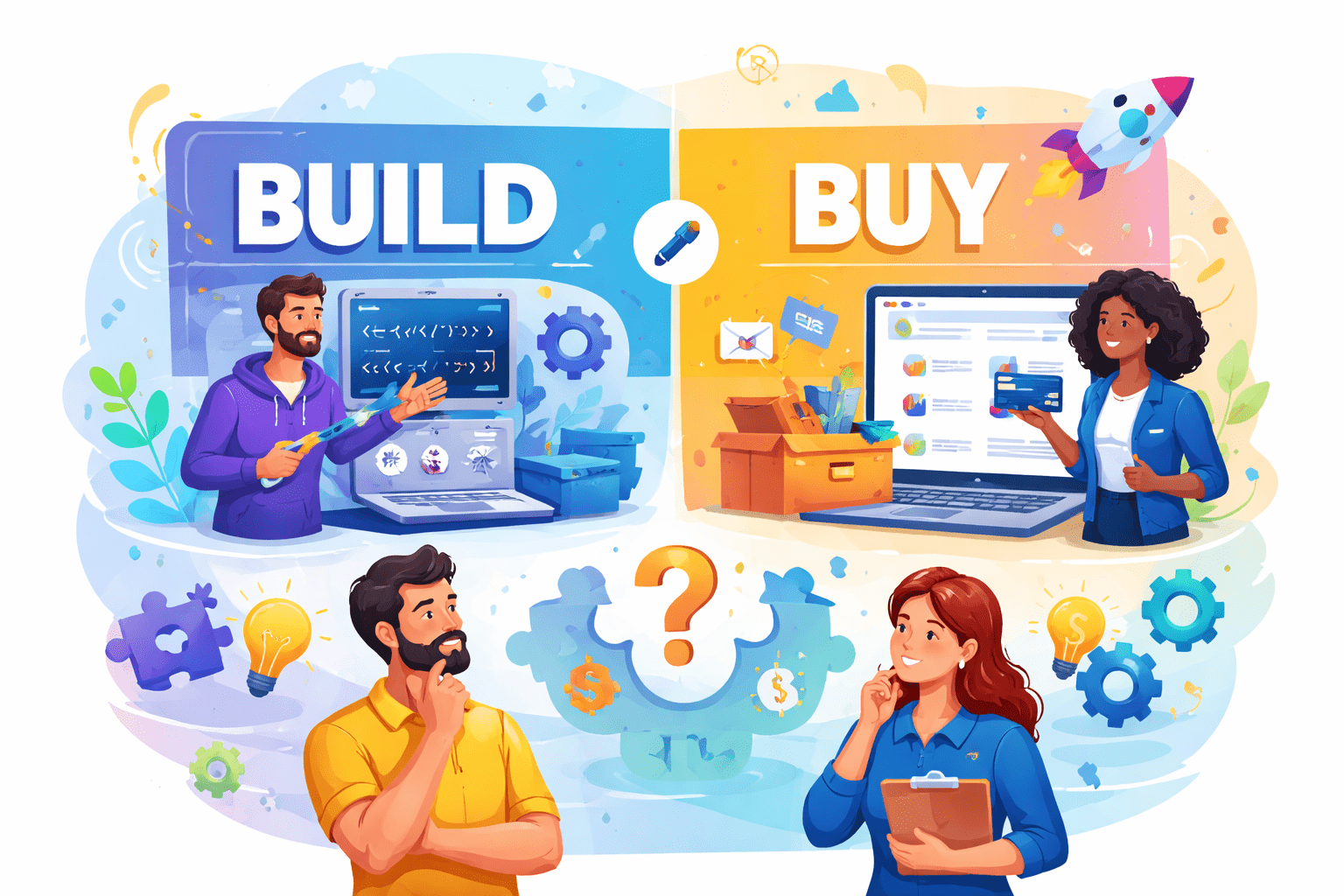
Build vs buy decisions are among the most critical choices startup founders and SaaS leaders face. Whether to build a tool in-house or buy an existing software solution affects speed to market, costs, scalability, team focus, and long-term competitiveness. Making the right build vs buy decisions early can accelerate growth, while poor choices often lead to wasted resources, technical debt, and missed opportunities.
This expert guide explains how startups and SaaS companies should approach build vs buy decisions in a structured, practical, and sustainable way. The goal is not to follow trends, but to choose the option that best supports your business strategy, stage, and capabilities.
Why Build vs Buy Decisions Matter for Startups and SaaS?
Startups operate under tight constraints: limited capital, small teams, and high uncertainty. Every major decision must balance speed and quality. Build vs buy decisions matter because they determine how quickly you can execute and how flexible your business will be over time.
Key reasons these decisions are so important include:
- Engineering time is expensive and limited
- Buying software can accelerate execution
- Building software can create differentiation
- Early decisions affect scalability and maintenance
For SaaS companies, build vs buy decisions are even more sensitive because internal tools often intersect with the core product and customer experience.
Understanding the “Build” Option
Building software means developing a tool internally using your own engineering resources. This approach gives you full control over features, architecture, and data, but it also comes with higher responsibility.
Advantages of Building Software
- Complete customization for your workflows
- Full ownership of intellectual property
- Ability to tightly integrate with your product
- Long-term strategic differentiation
Disadvantages of Building Software
- High upfront development cost
- Ongoing maintenance and technical debt
- Slower time to market
- Dependency on internal engineering capacity
Build vs buy decisions should never assume that building is always better. In many cases, building distracts teams from core value creation.
Understanding the “Buy” Option
Buying software means using third-party tools or SaaS platforms to meet your needs. This is often the default choice for early-stage startups.
Advantages of Buying Software
- Faster implementation and deployment
- Lower initial cost compared to building
- Proven reliability and feature maturity
- Ongoing updates and support
Disadvantages of Buying Software
- Limited customization
- Vendor dependency
- Potential scaling costs
- Integration constraints
Buying is the fastest way to move forward—especially when the tool is not central to your competitive advantage.
Build vs Buy Decisions Based on Startup Stage
Startup stage plays a major role in build vs buy decisions. What makes sense for an early-stage startup may not work for a scaling SaaS company.
Early-Stage Startups
Early teams should default to buying tools whenever possible. The focus should be on validating the business model, not building internal systems.
Typical buy-first areas include:
- CRM and sales tools
- Marketing automation
- Accounting and payroll
- Project management
Growth-Stage Startups
As teams grow, some may shift. If existing tools no longer support scale or workflows, selective building may become reasonable.
Scaling SaaS Companies
At scale, building internal tools can improve efficiency and differentiation—especially when third-party tools become cost-prohibitive or restrictive.
Build vs Buy Decisions and Core Competencies
A simple rule helps clarify build vs buy decisions:
If it is not a core competency, buy it.
Core competencies are what make your startup or SaaS product unique. Anything outside that scope is usually better handled by specialized vendors.
Examples:
- A fintech startup should not build payroll software
- A SaaS analytics company may build proprietary data pipelines
- A marketplace should not build email infrastructure
Aligning build vs buy decisions with core competencies keeps teams focused and productive.
Cost Analysis
Cost is often misunderstood. Founders frequently compare subscription fees to development costs without considering total cost of ownership.
Costs of Building
- Developer salaries and benefits
- Infrastructure and tooling
- Maintenance and bug fixes
- Opportunity cost of engineering time
Costs of Buying
- Subscription or usage-based fees
- Integration and setup costs
- Scaling and add-on pricing
- Vendor lock-in risks
Smart build vs buy decisions evaluate costs over 2–3 years, not just the first month.
Speed to Market and Opportunity Cost
Speed is one of the most decisive factors. Building software takes time, and time is often a startup’s most valuable resource.
Buying tools allows teams to:
- Launch faster
- Test ideas quickly
- Adapt based on feedback
- Focus on customer value
If building delays customer-facing progress, the opportunity cost may outweigh any long-term benefits.
Scalability and Flexibility Considerations
Scalability should always factor into build vs buy decisions. Some tools scale effortlessly, while others become bottlenecks.
When evaluating scalability, ask:
- Will this solution support growth in users and data?
- Does pricing scale predictably?
- Can it adapt to future workflows?
- Will customization be required later?
Sometimes buying is best early, followed by building later when requirements stabilize.
Risks and Long-Term Implications
Every build vs buy decision carries risk. Building increases technical risk, while buying introduces vendor risk.
Common risks include:
- Building tools that become obsolete
- Over-customizing internal systems
- Vendor shutdowns or pricing changes
- Integration failures
Reducing risk requires regular review of your software stack and willingness to revisit earlier decisions.
A Practical Framework
Many founders benefit from structured evaluation models, and this build vs buy software decision guide explains how to weigh cost, speed, risk, and long-term scalability when choosing between custom development and off-the-shelf tools.
To make consistent decisions, startups should use a simple framework:
Ask these questions:
- Is this tool core to our competitive advantage?
- Can an existing solution meet 80% of our needs?
- Do we have the technical capacity to maintain it?
- Will building slow down core product development?
- What is the 3-year cost comparison?
If most answers favor buying, buy. If most favor building, consider building carefully.
Common Mistakes to Avoid
Many startups struggling because of avoidable mistakes:
- Overestimating internal engineering capacity
- Building tools “just because we can”
- Ignoring long-term maintenance costs
- Delaying decisions and doing neither well
Avoiding these pitfalls leads to more disciplined and scalable technology choices.
Final Thoughts
Build vs buy decisions are not one-time choices. As startups evolve and SaaS companies scale, the right answer can change. What matters is having a clear, repeatable decision-making process.
By aligning your stage, core competencies, cost structure, and growth goals, you create a technology strategy that supports—not hinders—your business. The most successful startups are not those that build everything, but those that choose wisely where to build and where to buy.
When approached thoughtfully and becoming a strategic advantage rather than a recurring dilemma.